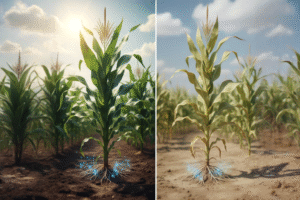


Zinc (Zn) is a vital micronutrient that plays a decisive role in how plants respond to environmental stresses—especially drought, one of the leading factors limiting global crop productivity.
According to a 2020 study published in MDPI Agriculture, zinc deficiency directly impairs enzyme activity, chlorophyll synthesis, and photosynthetic efficiency, leading to 30–40% yield reductions in sensitive crops under water-deficit conditions.
Zinc in Plant Physiology
Zinc is an essential cofactor for more than 300 enzymes, including carbonic anhydrase and superoxide dismutase (SOD)—both critical for detoxifying reactive oxygen species generated during drought stress.
Field and pot trials cited in the paper showed that applying 5–10 mg Zn per kg of soil enhanced enzymatic activity by 25–45% in crops such as wheat (Triticum aestivum) and maize (Zea mays).
Water Retention and Photosynthetic Efficiency
Plants supplemented with zinc demonstrated 20–35% greater water retention compared to untreated controls. This improvement was attributed to the accumulation of osmolytes (e.g., proline and soluble sugars), which stabilize cell membranes under dehydration.
Total chlorophyll content also increased 1.5–2.3 fold, resulting in stronger photosynthetic capacity and greater dry-matter production.
Practical Zinc Application under Drought Conditions
The researchers recommend applying zinc mainly as zinc sulfate heptahydrate (ZnSO₄·7H₂O) through either soil incorporation or foliar spraying:
-
Soil application: 5–10 kg ZnSO₄·7H₂O per hectare, once at sowing or early vegetative stage.
-
Foliar application: 0.3–0.5% ZnSO₄ solution, applied twice during the vegetative and flowering stages.
Foliar treatment improved drought resistance by up to 50% compared with untreated plants.
Effects on Crop Yield and Quality
Field experiments reported the following yield responses after zinc supplementation:
-
Wheat grain yield: increased by 15–28%.
-
Protein content: improved by 10–12%.
-
Drought damage: reduced by approximately 40% in zinc-treated plants.
These improvements were consistent across multiple soil types and climate conditions, confirming zinc’s universal role in mitigating drought impacts.
Interactions with Other Nutrients
Zinc showed a synergistic relationship with nitrogen (N) and phosphorus (P) when applied at moderate rates.
However, excessive zinc (> 15 mg Zn/kg soil) caused antagonistic effects on iron (Fe) and manganese (Mn) uptake, highlighting the importance of balanced micronutrient management.
Conclusion
Zinc is a key factor in improving plant tolerance to drought through multiple mechanisms: enhancing enzymatic defense systems, maintaining water balance, and supporting chlorophyll formation.
Optimized zinc fertilization—whether soil-based or foliar—can significantly increase crop resilience, productivity, and nutritional value under water-limited environments.
Reference
Ali, S., Rizwan, M., Qayyum, M. F., Ok, Y. S., Ibrahim, M., Riaz, M., & Shahzad, A. N. (2020). The Critical Role of Zinc in Plants Facing the Drought Stress. Agriculture, 10(9), 396.
https://doi.org/10.3390/agriculture10090396