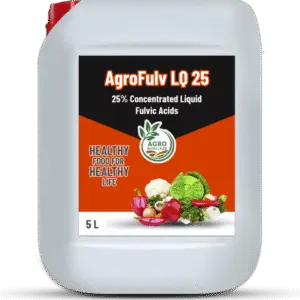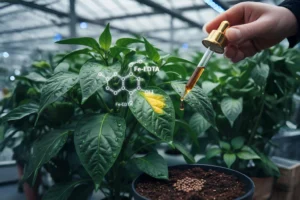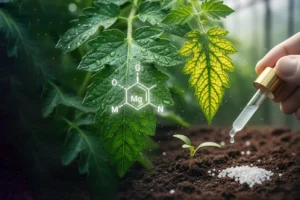

In the pursuit of sustainable agriculture and higher crop quality, biostimulants have emerged as a game-changer for modern farming. A recent 2025 review published in the Middle East Journal of Applied Sciences highlights the significant impact of Fulvic Acid—a natural organic compound derived from the decomposition of plant and microbial matter. Unlike standard fertilizers, Fulvic Acid acts as a catalyst, enhancing nutrient uptake, improving soil structure, and boosting plant resilience against abiotic stress.
This article explores the practical applications of Fulvic Acid for vegetable crops, based on the findings of S.D. Abou-Hussein and colleagues.
What is Fulvic Acid?
Fulvic acid is a fraction of humic substances characterized by its low molecular weight and high oxygen content. This unique chemical structure allows it to easily bind with minerals and penetrate plant cells more efficiently than larger humic acid molecules. It serves as a natural chelator, making essential nutrients like Nitrogen (N), Phosphorus (P), and Potassium (K) more available to the plant.
Key Benefits for Vegetable Crops
According to the research review, applying Fulvic Acid delivers three primary benefits:
-
Enhanced Growth & Root Development: It promotes cellular activity and photosynthetic efficiency, leading to more robust vegetative growth.
-
Increased Yield: Studies cited in the review indicate that treated crops show significant increases in total yield due to better nutrient retention and cation exchange capacity in the soil.
-
Superior Quality: Perhaps most importantly for market value, Fulvic Acid improves physical and chemical quality attributes, including size, color, texture, flavor, and the concentration of bioactive compounds like vitamins and antioxidants.
Practical Application Rates & Methods
The effectiveness of Fulvic Acid depends heavily on the application method and concentration. Based on the data synthesized in the review regarding optimal plant response, the following rates are recommended:
1. Foliar Application (Spraying)
Foliar feeding is highly effective because Fulvic Acid’s small molecular size allows for rapid absorption through the leaves.
-
Recommended Concentration: 3 g/L to 6 g/L.
-
Timing: Apply during critical growth stages (vegetative and early flowering).
-
Impact: Research indicates that foliar spraying at these levels significantly improves plant height, leaf number, and fruit quality parameters.
2. Soil Drench Application
Applying Fulvic Acid directly to the soil helps improve the rhizosphere environment.
-
Recommended Rate: 6 g/L applied as a soil drench.
-
Usage: Can be incorporated into drip irrigation systems.
-
Impact: Soil application at this rate has been shown to yield the highest values for vegetative growth and total bulb/fruit weight in crops, outperforming lower concentrations.
Conclusion
The 2025 review by Abou-Hussein et al. confirms that Fulvic Acid is more than just a soil amendment; it is a potent biostimulant that bridges the gap between soil health and crop productivity. For vegetable growers looking to improve quality and yield sustainably, integrating Fulvic Acid at the recommended rates of 3–6 g/L is a scientifically backed strategy.
Reference
-
Abou-Hussein, S.D., Mahmoud, S.H., El-Tohamy, W.A., Badr, M.A., & Orabi, S.A. (2025). Application of Humic and Fulvic Acids as Biostimulants to Improve Growth, Yield and Quality of Vegetable Crops. A review. Middle East Journal of Applied Sciences, 15(1), 57-68. DOI: 10.36632/mejas/2025.15.1.5