
Cultivating tomatoes and sweet peppers in tropical environments presents unique challenges, primarily due to heat stress and high disease pressure. The use of biostimulants, specifically derived from the brown seaweed Ascophyllum nodosum, has emerged as a scientifically proven method to enhance crop physiology, improve yield, and strengthen natural defense mechanisms against pathogens.
Optimized Application Strategy
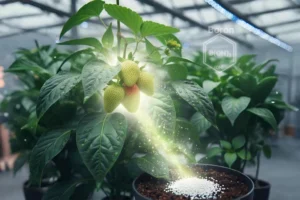
To achieve maximum physiological benefits, the precise application of seaweed extract is critical. Scientific data indicates that a 0.5% concentration diluted in water is the optimal dosage. This solution should be applied via foliar spray directly onto the leaves at 10-day intervals. This consistent schedule ensures that the bioactive compounds—such as cytokinins, auxins, and betaines—are continuously available to stimulate plant metabolic pathways.
Impact on Growth and Biomass
Regular treatment with Ascophyllum nodosum leads to substantial physical differences in crop development compared to untreated plants:
-
Tomato Growth:
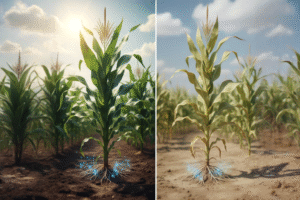
Plants treated with the extract demonstrate a significant increase in vertical growth, reaching average heights of 151.68 cm (compared to roughly 102 cm for untreated plants). Root systems also benefit immensely, extending to 30.07 cm, which is more than double the length of untreated roots. Consequently, the total dry biomass of the plant increases by approximately 52%, reaching 38.30 g. -
Sweet Pepper Development:
The impact is equally pronounced in peppers, where plant height averages 90.54 cm under treatment versus 52.48 cm without it. The total biomass nearly doubles, reaching 22.50 g.
Disease Suppression and Yield Enhancement
Beyond vegetative growth, seaweed extracts function as bio-elicitors, triggering the plant’s systemic acquired resistance (SAR). This upregulation of defense enzymes helps suppress common tropical diseases like Bacterial Spot and Early Blight by up to 50%.
For the highest possible yield, an integrated approach is recommended. Alternating the application of the 0.5% seaweed extract with standard fungicides can reduce disease severity by 60% and result in a fruit yield increase of 57%.
Reference
Ali, O., Ramsubhag, A., & Jayaraman, J. (2019). Biostimulatory activities of Ascophyllum nodosum extract in tomato and sweet pepper crops in a tropical environment. PLOS ONE, 14(5), e0216710.
Available at: https://pmc.ncbi.nlm.nih.gov/articles/PMC6516672/