

Copper is a vital micronutrient required in extremely small quantities, yet it influences some of the most critical physiological and biochemical pathways in plants. Recent agronomic findings—including results from the MDPI wheat study—demonstrate that copper is not merely a secondary element but a key regulator of grain quality, enzyme activity, and plant immunity.
1. Copper: A Core Component of Plant Metabolism
Copper serves as a cofactor for several essential enzymes involved in:
-
Photosynthesis efficiency
-
Protein synthesis
-
Strengthening of cell walls
-
Formation of reproductive tissues
-
Regulation of flowering and pollen fertility
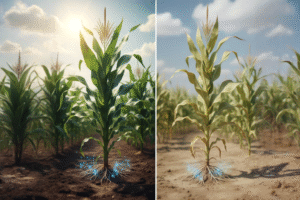
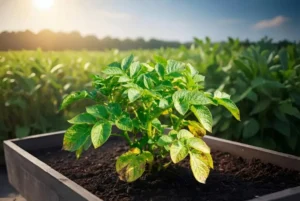
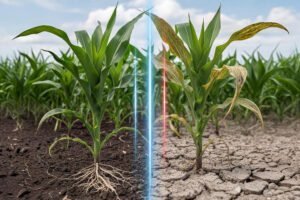
This explains why copper deficiency often leads to fewer spikes, poor fertilization, and reduced grain set.
2. How Copper Enhances Grain Quality
Field results have shown that supplying wheat with sufficient copper—especially through foliar feeding—can significantly improve grain quality parameters.
Documented Improvements:
Using rates around 0.5–2.0 kg/ha of copper:
-
Protein increased by up to 0.9%
-
Wet gluten improved by more than 2%
These improvements directly enhance:
-
Baking performance
-
Dough elasticity
-
Thousand-kernel weight
3. Why Copper Deficiency Is Increasing in Many Regions
Agricultural surveys and soil analyses indicate that available copper in topsoil layers is decreasing due to:
-
Crop removal over many seasons
-
Reduced natural deposition tied to climate change
-
Erosion of copper-rich surface layers
Consequently, wheat often responds strongly to foliar copper, because roots encounter increasingly low Cu levels in the upper soil horizon.
4. Copper’s Role in Disease Resistance and DON Reduction
Copper contributes significantly to plant defense mechanisms.
Research data demonstrate that adequate copper levels help reduce:
-
Fusarium infection severity
-
Mycotoxin accumulation, including DON (Deoxynivalenol)
This happens because copper boosts:
-
Antioxidative enzyme systems
-
Defense-related metabolic pathways
-
Structural integrity of vascular tissues
Though copper is not a fungicide per se, it strongly enhances the plant’s natural immunity.
5. Practical Guidelines for Copper Management in Wheat
Effective Rates
Based on agronomic evidence:
-
0.3–0.5 kg/ha → to improve vegetative growth and enzyme activity
-
1.0–2.0 kg/ha → to enhance grain quality and reduce DON levels
Best Timing
Apply twice during the season:
-
Tillering
-
Flowering
Preferred Method
Foliar application is the most efficient approach when soils show low Cu availability.
6. Can Copper Be Overapplied?
Excessive copper can cause toxicity, but this is unlikely when farmers stay within scientifically validated limits (up to 2.0 kg/ha for wheat).
Overuse may impair:
-
Root growth
-
Balance of other micronutrients
Thus, a targeted, data-driven approach is recommended.
Conclusion
Copper may be required in micro amounts, but its influence on wheat is macro in impact. It enhances:
-
Growth and vigor
-
Grain quality
-
Protein and gluten formation
-
Stress tolerance
-
Disease resistance
-
Reduction in DON accumulation
Modern research reinforces that optimizing copper nutrition is a key strategy for achieving high-performance wheat production.
Reference
MDPI – Agronomy Journal.
Investigation of the Effect of a New Type of Copper–Sucrose Complex Compound on the Yield and Quality of Winter Wheat.
https://www.mdpi.com/2073-4395/15/7/1506