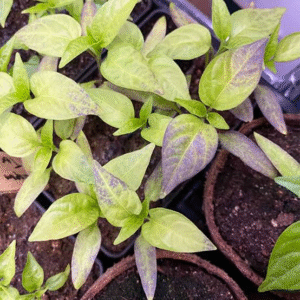

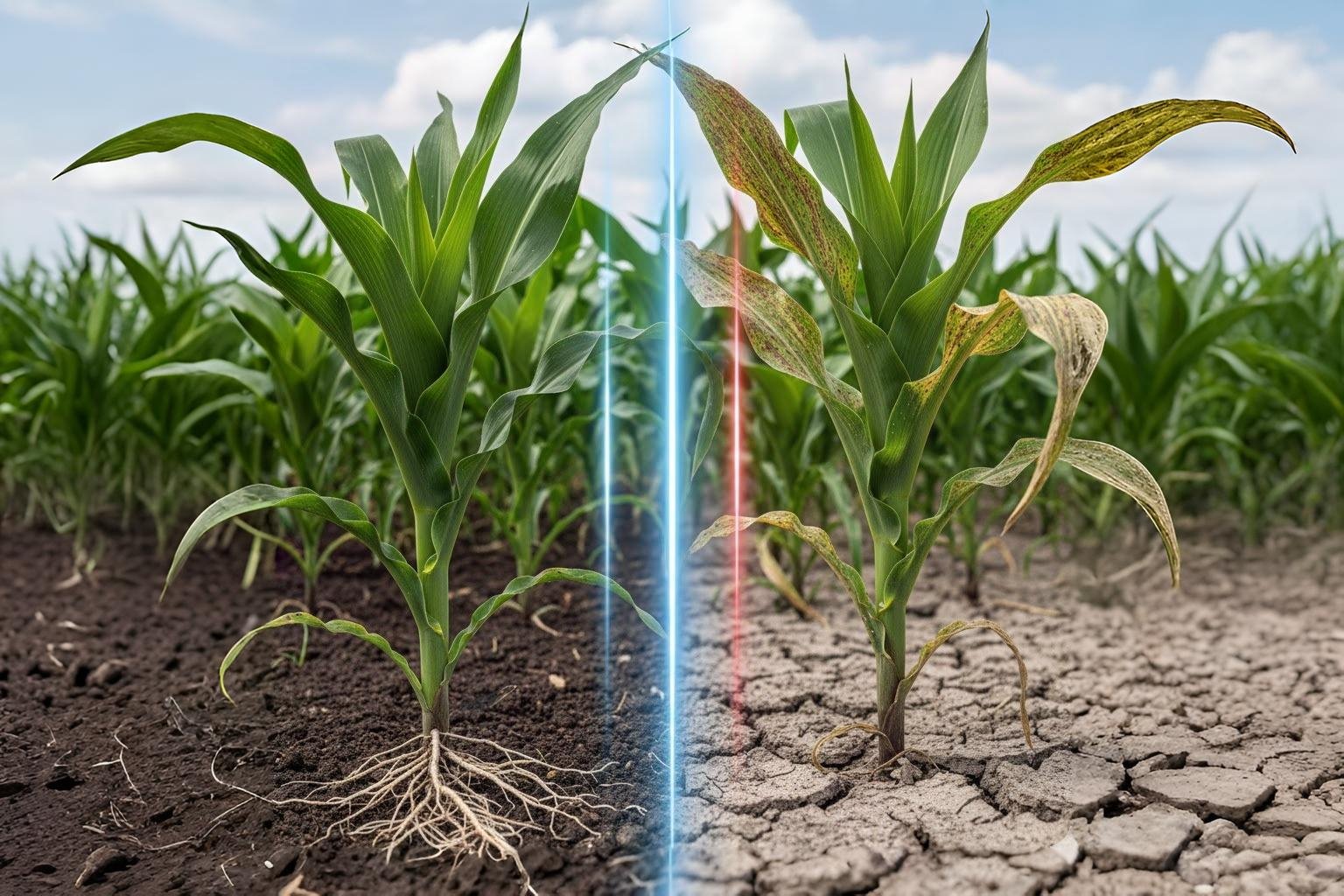
Potassium (K) is one of the essential macronutrients required for plant growth and efficient crop production. In the research paper titled “Potassium nutrition of plants: an overview on its crucial role in crop production”, the role of potassium in plant physiological processes, its relationship with other nutrients, and the need for a nutritional balance to ensure maximum yield and crop quality are reviewed.
Physiological Roles
Potassium participates in many vital plant functions, including:
-
Activating hundreds of enzymes (especially those involved in nitrogen and carbon metabolism, protein synthesis, and photosynthesis).
-
Regulating osmotic pressure within cells (osmotic regulation), which helps control stomatal opening and closing and water loss.
-
Contributing to carbohydrate transport (longitudinal translocation across cells) and sugar distribution within the plant.
-
Indirectly enhancing resistance to environmental stresses such as drought, salinity, or sudden shocks.
When potassium is deficient, these functions are severely affected, leading to poor growth, reduced crop quality, and increased susceptibility to diseases.
Availability and Forms in Soil
Potassium in soil exists in three main categories:
-
Unavailable potassium (contained within solid minerals such as feldspars and clay minerals) — typically represents 90–98% of total soil potassium.
-
Exchangeable potassium (Exchangeable K) — the fraction bound to clay or organic surfaces that can be released for plant use.
-
Soil solution potassium (Solution K) — the immediately available fraction (in the soil water solution), but it represents a very small proportion of the total.
Exchangeable and solution potassium together typically account for only about 1–2% of the total potassium in the soil, while the rest remains “fixed” within clay minerals.
Therefore, despite large total potassium reserves, the fraction available for plant uptake is limited, necessitating careful fertilizer management.
Quantitative Recommendations for Potassium Use in Crops
The research paper presents numerous studies on potassium fertilization rates across different crops, with some representative results:
-
For “Red Fuji” apples, the highest yield and fruit quality were achieved with an application of 600 kg/ha of potassium.
-
In citrus (orange) crops, approximately 500 kg/ha of potassium was used, resulting in improved yield and fruit quality.
-
In other studies, a nutrient solution containing 6 mmol K was used for pear growth, enhancing photosynthetic activity and plant development.
-
In experiments on vegetable crops (such as pepper), applying 150 kg/ha of K₂SO₄ (potassium sulfate) produced significant improvements in root biomass and disease resistance.
These examples do not constitute universal recommendations but rather indicate how requirements vary depending on crop type, microenvironment, and soil conditions.
Research also shows that nitrogen (N) fertilization without adequate potassium supplementation can result in nitrogen wastage and lower efficiency. For instance, increasing potassium levels alongside nitrogen may enhance nitrogen use efficiency (NUE).
In some field trials on cereal crops, combined N and K applications produced yield increases ranging from 15.5% to 32.5% compared to nitrogen-only fertilization, depending on year and site conditions.
Interaction Between Potassium and Other Nutrients (Especially Nitrogen)
One of the key points emphasized in the paper is the interaction between potassium and nitrogen (N–K interaction), which can be either synergistic or competitive depending on conditions. Key insights include:
-
In plants, nitrate (NO₃⁻) uptake is often coupled with potassium uptake (co-transport). When potassium is sufficiently available, nitrate can be transported more effectively to the upper plant parts.
-
Conversely, the presence of ammonium (NH₄⁺) can significantly inhibit potassium uptake in some species (for example, in barley, where NH₄⁺ has been shown to suppress K⁺ uptake by up to 90% in high-affinity systems).
-
Potassium deficiency can reduce the activity of nitrate reductase (NR) and enzymes involved in nitrogen metabolism (GS, GOGAT), thereby slowing nitrate uptake and assimilation.
-
Maintaining a balanced N:K ratio is essential; in some studies, precise N:K proportions were optimized to maximize physiological efficiency and yield while minimizing fertilizer losses.
Challenges
-
Certain soils contain large amounts of potassium locked in non-available forms (fixed within minerals), which reduces fertilizer efficiency.
-
Seasonal variations, soil pH, clay and organic matter composition, and salinity can all affect potassium exchange and availability.
-
Excessive or unbalanced potassium application may have counterproductive effects, including antagonism or competition with magnesium or calcium.
-
In some cases, potassium recommendations depend on nitrogen or phosphorus levels, implying that fertilization should be viewed as an integrated system rather than an isolated component.
Practical Recommendations for Agricultural Systems
-
Conduct soil analysis and measure exchangeable potassium (Exchangeable K) to determine actual deficiencies or needs before fertilization.
-
Adopt a balanced fertilization program between nitrogen and potassium, maintaining optimal N:K ratios for crop efficiency.
-
Split potassium applications (a base dose + growth-stage doses) to minimize losses from leaching or fixation in the soil.
-
Select an appropriate potassium source (e.g., KCl or K₂SO₄) depending on crop sensitivity to chloride or the need for sulfur.
-
Monitor soil conditions after planting and apply corrective doses if needed during the growing season.
-
Implement precision agriculture practices (balanced irrigation, organic mulching, improved soil structure) to enhance potassium efficiency and reduce losses.
Conclusion
The reviewed paper concludes that potassium is indispensable for achieving healthy plant growth and high crop productivity. Its importance lies not only in ensuring sufficient supply but also in maintaining a balance with nitrogen and other nutrients while adapting to soil and climatic conditions.
Research recommendations emphasize that fertilization practices should be tailored to crop type and local soil analysis, and that an integrated approach combining soil testing + nutrient balance + precision agriculture technologies represents the most effective path toward sustainable, high-quality crop production.